NEDA XI
Building SEDGIS for Regional Planning
Front-end internship work for NEDA XI, building React and Material UI features for a government socio-economic GIS database through an academic-industry partnership.
 Ian Gabriel Agujitas


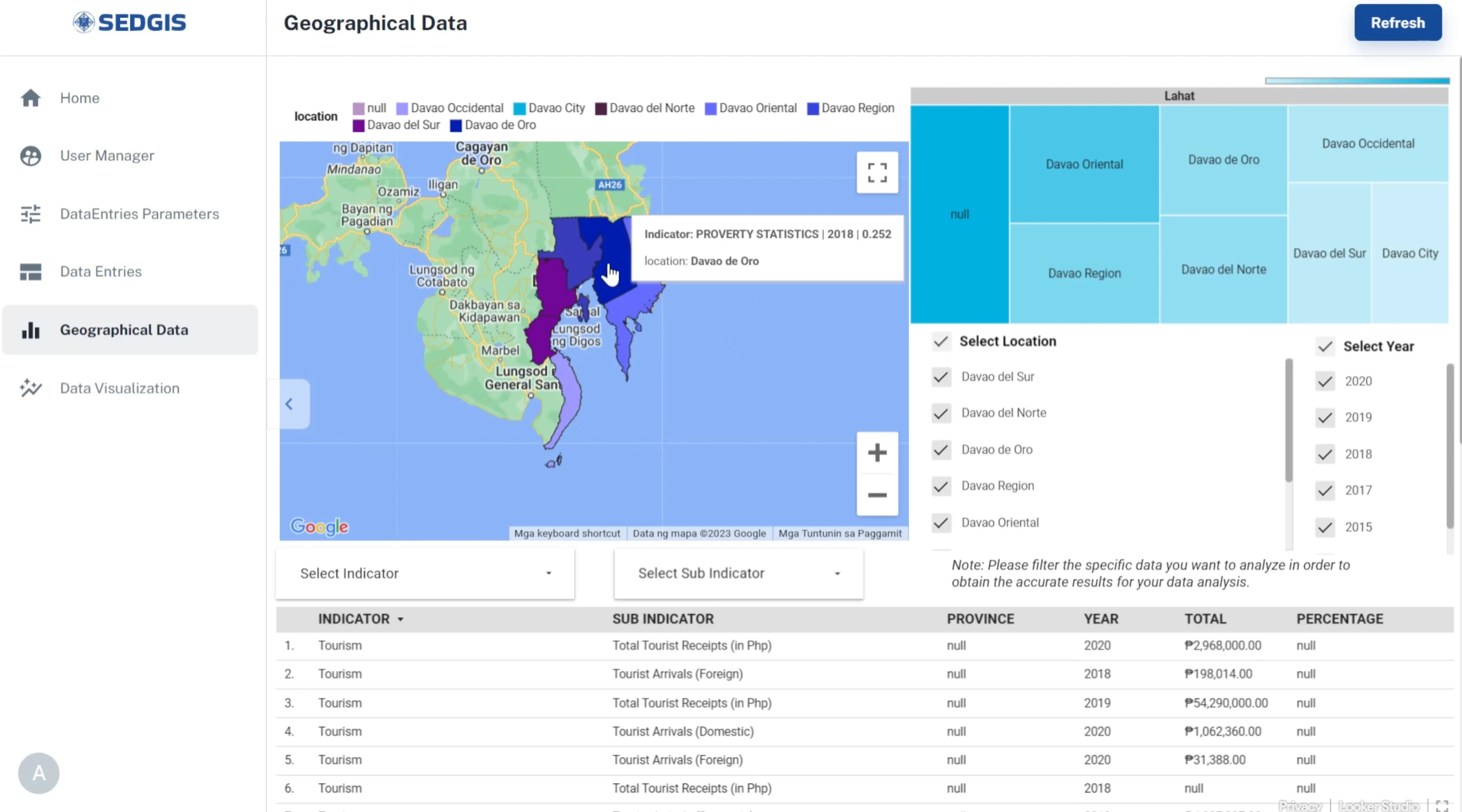
January 2023 was the first time software stopped feeling like coursework and started feeling like a responsibility. Through an academic-industry partnership between Jose Maria College and NEDA XI, the National Economic and Development Authority for Region XI in Davao, I joined the team building SEDGIS, a Socio-Economic Database with GIS for government planning work.
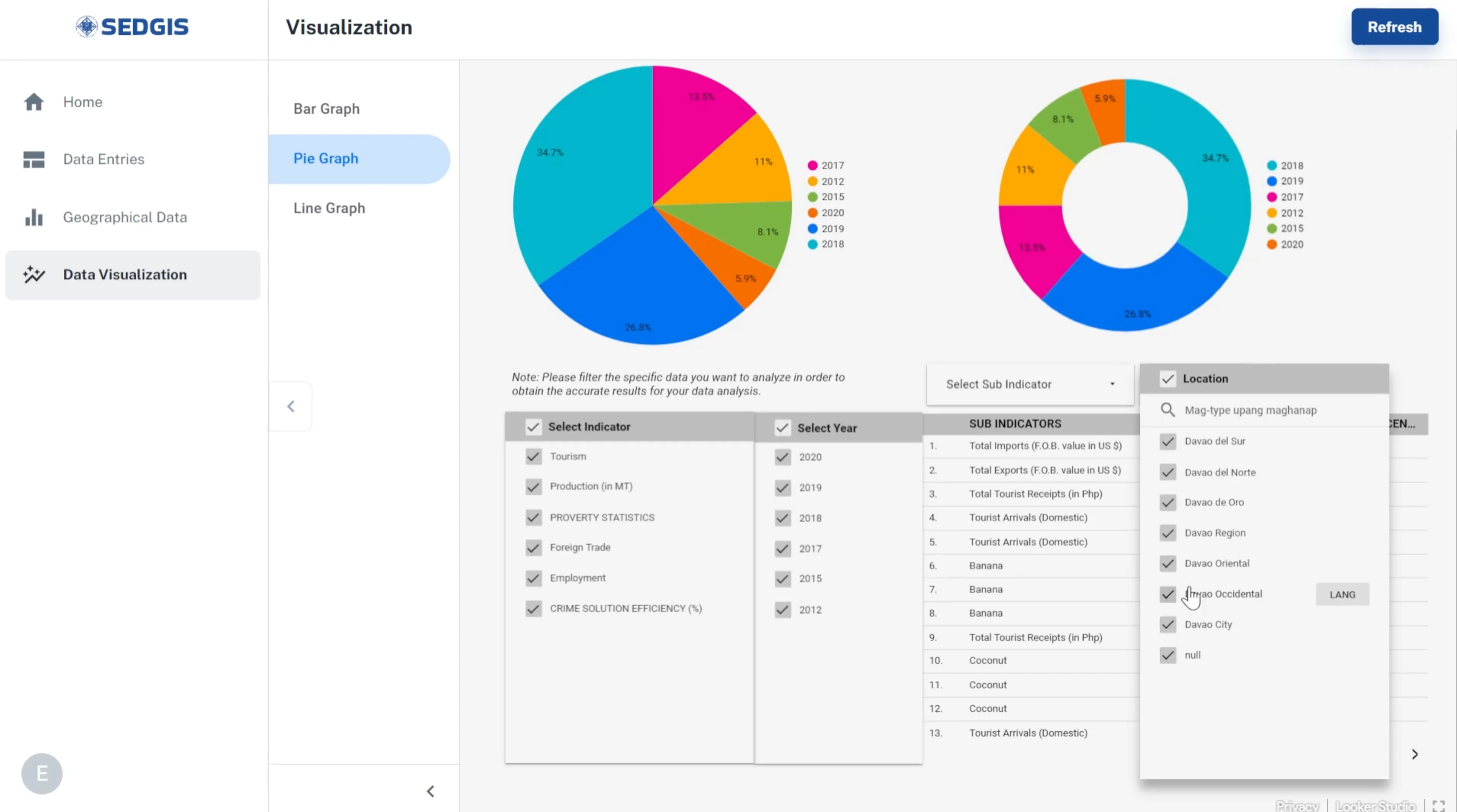
The project translated regional socio-economic data into an interface that could connect tables, filters, charts, and maps. The problem was not just displaying data. The work was about making the relationship between indicators and geography easier to read for people doing planning and research inside a government context.
I worked on front-end features with React and Material UI. That meant building interface components, improving screens, and helping shape the data visualization layer around charts, filters, and GIS views. Material UI gave the project a consistent base for forms, tables, controls, and dense content, which mattered because the users were not browsing casually. They were trying to understand real regional data.
The most important lesson was adapting to professional development pressure. It was my first exposure to real workflows: building inside an existing project, responding to feedback, making UI decisions that affected other people, and learning that a working interface has to be understandable beyond the developer who wrote it.
Looking back, NEDA XI was the beginning of my career in software development. It gave me the first version of a habit I still rely on now: care about the user, keep the interface legible, and take the work seriously because someone else is going to depend on it.